
AI Regulation and Parliamentary Participation: A Regional Debate in Panama
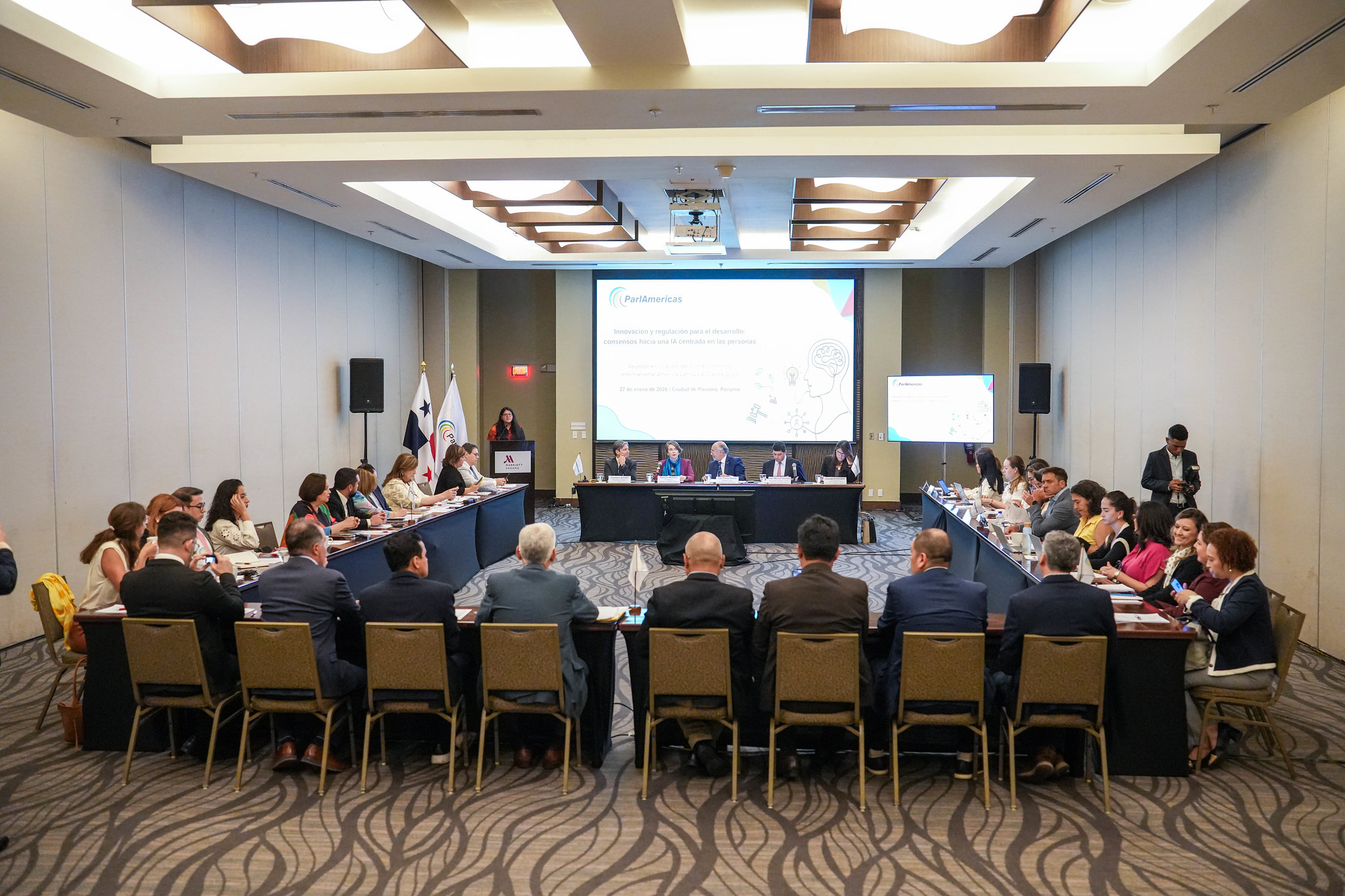
The Executive Director of Fundación Directorio Legislativo, Noel Alonso Murray, participated this Tuesday in Panama City in the meeting “Innovation and Regulation for Development: Building Consensus toward People-Centered Artificial Intelligence,” organized by ParlAmericas, in collaboration with CAF – Development Bank of Latin America and the Caribbean and the United Nations Development Programme (UNDP), within the framework of the Latin America and the Caribbean International Economic Forum 2026.
The event brought together parliamentarians from across the region, specialists, representatives of civil society, international organizations, and the private sector, with the aim of analyzing the challenges and opportunities that artificial intelligence (AI) presents for development in Latin America and the Caribbean, and of advancing consensus toward a regional governance framework that balances innovation, rights protection, and inclusion.
Regional AI Regulatory Landscape
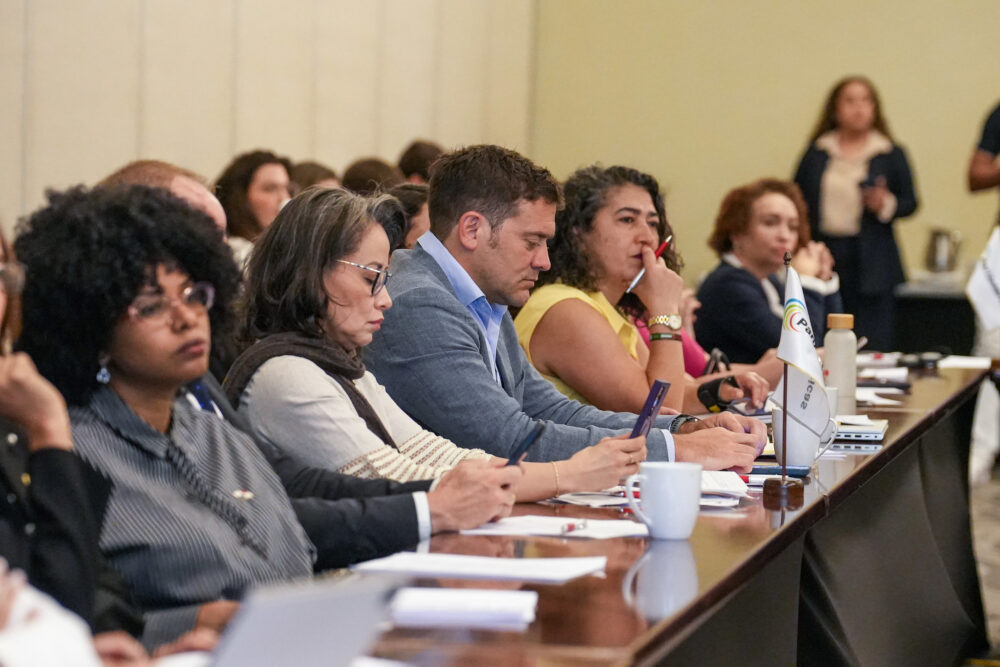

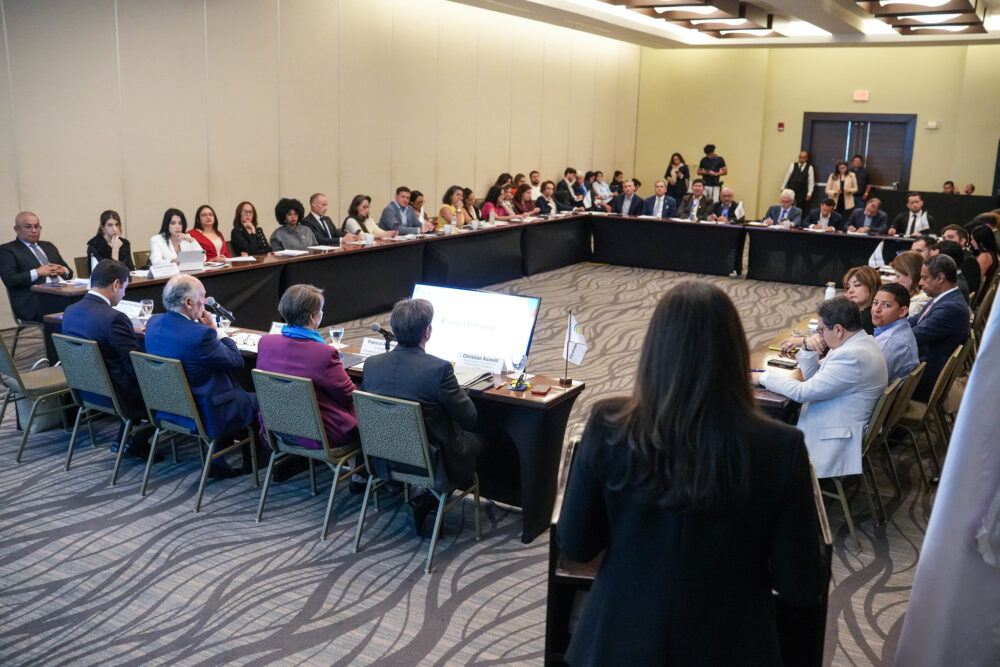
In this context, Noel Alonso Murray was one of the main speakers on the panel focused on artificial intelligence regulatory frameworks, where she presented a comparative overview of the advances, challenges, and opportunities related to AI regulation in the region.
During her remarks, Alonso Murray noted that Latin America is experiencing a period of intense legislative and strategic activity around artificial intelligence, albeit at uneven paces shaped by political, electoral, and institutional contexts in each country. She emphasized that the region is beginning to confront its most complex challenge: moving from political will and draft legislation to the effective implementation of regulations.
She also warned that the lack of adequate digital infrastructure, persistent capacity gaps, and the rapid pace of technological development act as significant bottlenecks to implementation. In this regard, she underscored the key role that international organizations with technical and financial capacity can play in supporting national and regional efforts.
Advances, Tensions, and Good Practices
The presentation reviewed different national approaches. It highlighted countries that have already moved toward operational regulatory frameworks—such as El Salvador and Peru—as well as those currently in advanced stages of legislative debate, including Brazil, Chile, Mexico, and Colombia, many of which are inspired by risk-based governance models.
At the same time, recurring tensions in the region were identified, such as resistance to early regulation from certain scientific and private-sector actors, the impact of electoral cycles on legislative agendas, and regulatory delays in personal data protection, all of which condition the development of comprehensive AI regulation.
Within this framework, Alonso Murray emphasized parliamentary good practices that help address a complex technological agenda, including the creation of specialized committees, formal multi-stakeholder dialogue spaces, and Open Parliament approaches to strengthen transparency, citizen participation, and accountability in debates on artificial intelligence.
Regional Dialogue and Next Steps
The panel also featured contributions from Senator Sonia Shirley Bernal Sánchez (Colombia), Coordinator of the Bicameral Ad Hoc Commission on Artificial Intelligence; Emanuella Ribeiro Halfeld Maciel, from Instituto Alana (Brazil); and Juan Carlos Reynardus, public policy consultant at Panama Legal Group. The session was moderated by Representative Rodrigo Goñi (Uruguay).
The day concluded with a call to deepen regional cooperation, promote people-centered AI governance frameworks, and strengthen the institutional capacities of parliaments to accompany technological development while safeguarding fundamental rights.
Directorio Legislativo’s participation in this meeting is part of the organization’s ongoing work on monitoring the regional legislative agenda, promoting Open Parliament principles, and conducting comparative analysis of public policies related to innovation, democracy, and the responsible use of new technologies.